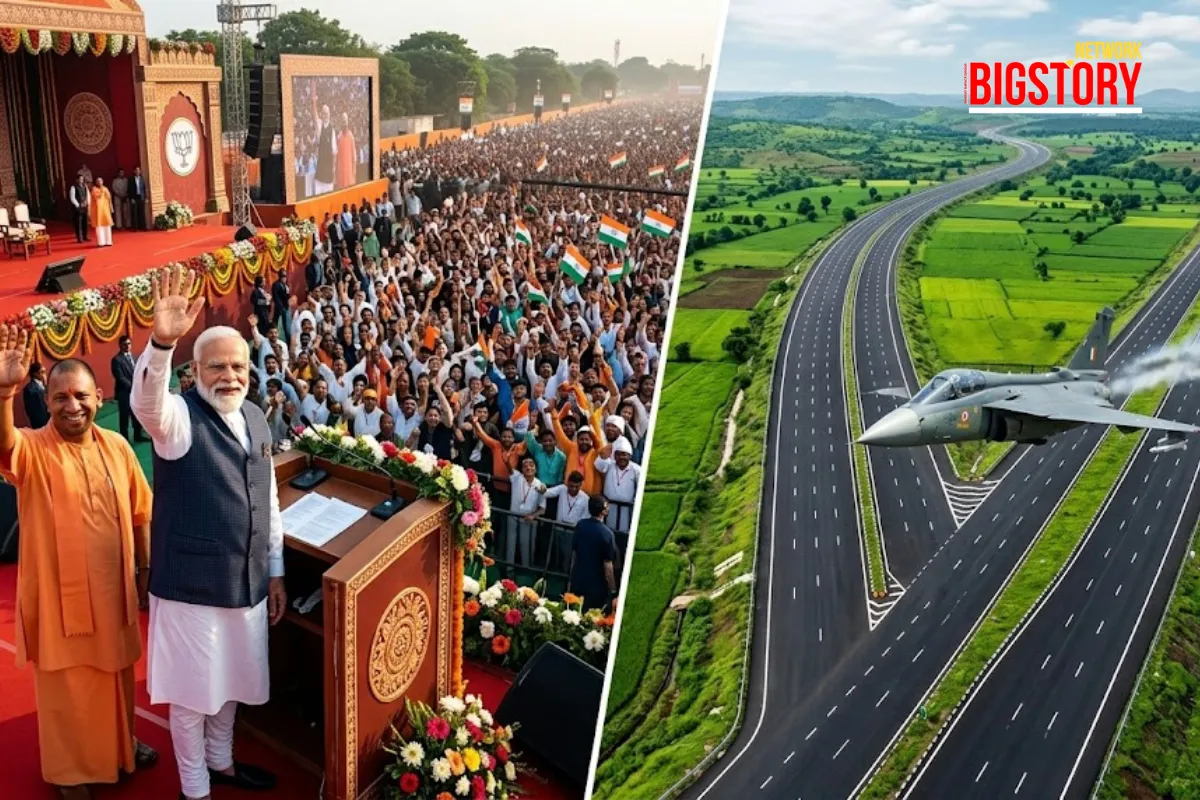
Uttar Pradesh’s infrastructure landscape has undergone a massive transformation as one of India's longest and most ambitious high-speed corridors officially opens to the public, doubling as both an economic lifeline and a military asset.
 Brajesh Mishra
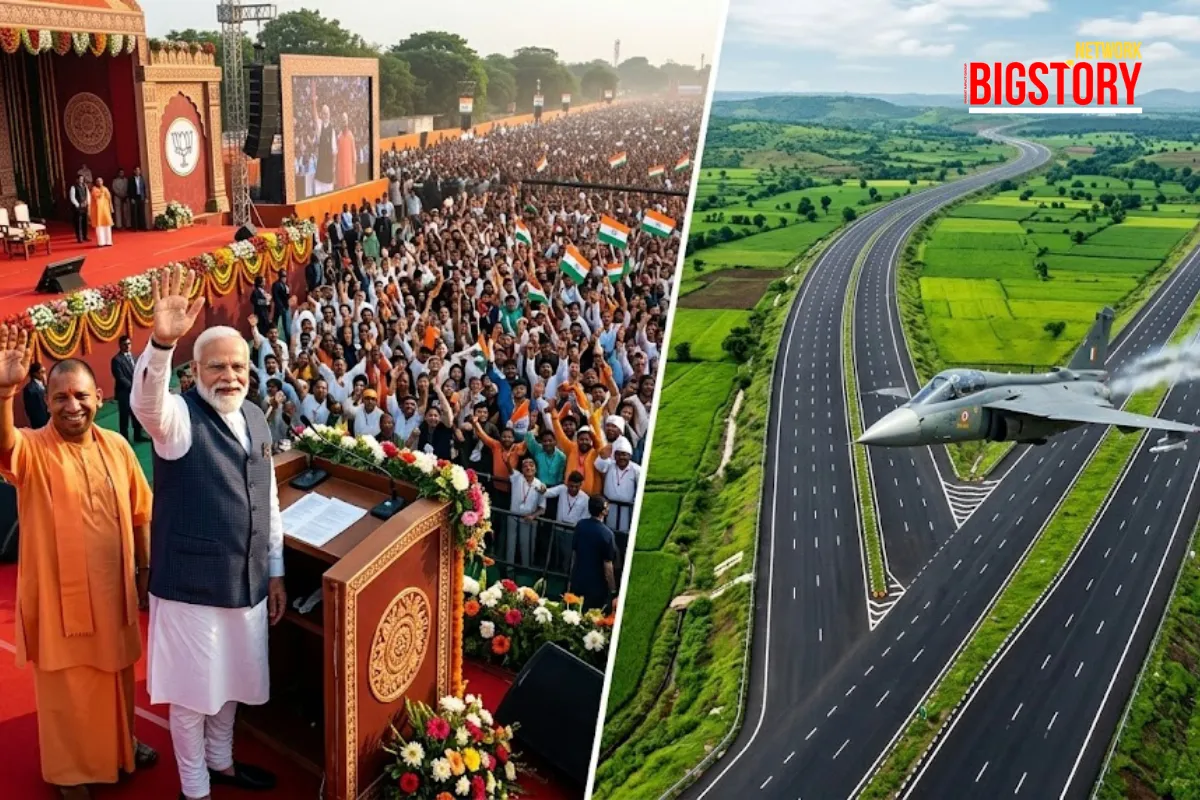
Uttar Pradesh's infrastructure landscape has just undergone a massive transformation. Earlier today, Wednesday, April 29, 2026, Prime Minister Narendra Modi officially inaugurated the 594-km-long Ganga Expressway, immediately opening one of India’s longest and most ambitious greenfield high-speed corridors to the public.
Alongside Chief Minister Yogi Adityanath, PM Modi dedicated the expressway during a massive launch event in Hardoi district, marking the completion of a project that fundamentally redraws the logistical map of Northern India.
Spanning an impressive 594 kilometres, the six-lane, fully access-controlled highway (which is structurally expandable to eight lanes) connects Bijauli village in Meerut directly to Judapur Dandu village in Prayagraj.
The corridor cuts a seamless path through 12 key districts: Meerut, Hapur, Bulandshahr, Amroha, Badaun, Shahjahanpur, Hardoi, Unnao, Raebareli, Pratapgarh, and Prayagraj.
Built at a staggering cost of approximately ₹36,230 crore under a public-private partnership (PPP) by developers including Adani Enterprises and IRB Infrastructure, the expressway is designed for top cruising speeds of 120 kmph. For the everyday commuter and freight operator, the impact is immediate: it slashes the grueling travel time between Western UP and Eastern UP from the previous 10–12 hours down to a highly efficient 6 hours.
This is not merely a transit route for civilian traffic; the Ganga Expressway has been purposefully engineered as a dual-use economic and military asset.
A major strategic highlight of the project is a fully functional 3.5-kilometre emergency landing facility built directly into the highway in Shahjahanpur district. This reinforced stretch is designed to accommodate Indian Air Force (IAF) fighter jets and heavy transport aircraft, providing a critical logistical fallback during national security emergencies.
To maximize the economic returns of the asphalt, the UP government is actively developing 12 Integrated Manufacturing and Logistics Clusters (IMLCs) along the corridor. Spanning over 6,500 acres, these hubs will feature cold storage units, e-commerce warehouses, and agro-processing plants, aiming to attract an estimated ₹46,660 crore in potential investments.
While the engineering specifications are record-breaking, the "Missed Angle" here is the structural economic shift this highway triggers within Uttar Pradesh.
Historically, Western UP (anchored by hubs like Meerut and Noida) has been an industrial powerhouse, while Eastern UP (Purvanchal) has severely lagged in private investment due to poor, sluggish logistics. By seamlessly linking Meerut to Prayagraj, the Ganga Expressway effectively eliminates the geographical "freight penalty" that has long kept heavy industries from setting up in the east.
Furthermore, with Phase 2 already approved to extend the highway from Haridwar to Ballia, this corridor acts as a massive physical monument to the BJP's "double engine" governance model. It arrives just in time to facilitate the massive, state-wide logistics and passenger flow required for the upcoming Maha Kumbh in Prayagraj.
With the Ganga Expressway now operational and Phase 2 already on the drawing board, has Uttar Pradesh finally built the logistical foundation required to officially dethrone Maharashtra and Gujarat as India's premier industrial powerhouse?
News & Wire Coverage:
 Exclusive Content






Sign up for the Daily newsletter to get your biggest stories, handpicked for you each day.


 Trending Now! in last 24hrs